
Beyond endpoints: measuring what matters to payers and patients
I am leading a multisite feasibility trial called PURE-EX. It is testing whether a community physical activity programme and its referral pathway are ready for a definitive effectiveness trial.
In this feasibility trial, breast cancer clinicians offer women a referral to a community physical activity programme after they have completed primary treatment for early-stage or locally-advanced disease. The programme aims to make physical activity support part of routine care and address treatment-related side effects, such as fatigue, reduced physical function and poorer quality of life.[1,2]
The primary outcome is feasibility. Other planned measures include fatigue, breast cancer specific quality of life, general health related quality of life, physical function, fitness and physical activity. We also interview participants about their experience.[1]
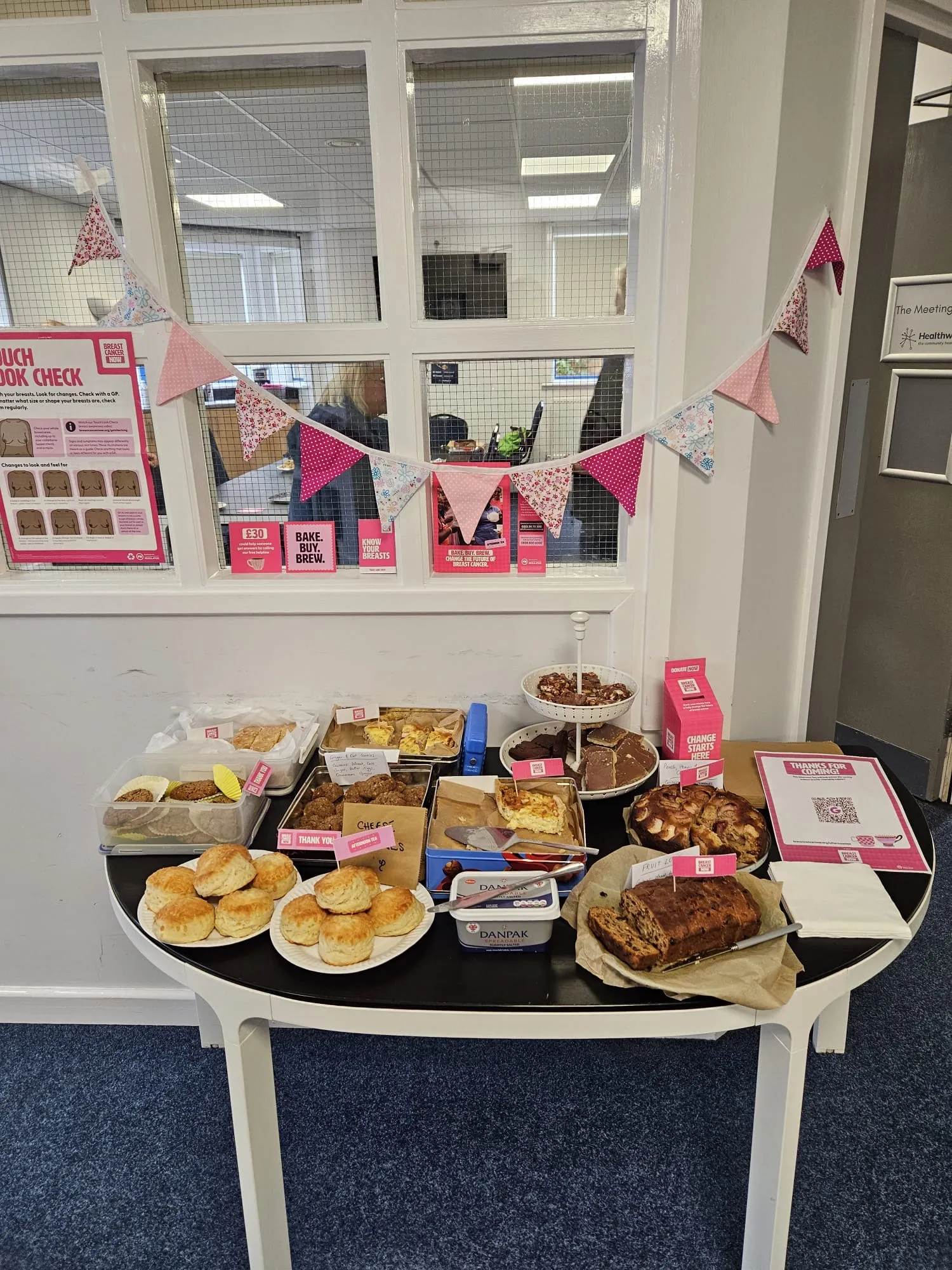
Then something happened that no outcome schedule had anticipated. Women attending one of the community programmes independently organised a bake sale for Breast Cancer Now, the charity funding the research. They also arranged a social together. Most had not known one another before joining the programme.
As of writing, they have raised £839 for Breast Cancer Now research.
There is no endpoint called women organise a bake sale and become friends.
The event does not prove that PURE-EX improved social connection or wellbeing. One story cannot tell us how common an experience is or whether the programme caused it.
But it exposed two useful questions. What else might have changed that our planned outcomes would never see? And how could we capture it in a form that informs a future HTA and reimbursement decision?
The things that matter do not always reach the medical record
Medical records are built to document care. They capture appointments, diagnoses, prescriptions, tests and clinical events. Drug trials go further, but they are usually built around prespecified primary and secondary outcomes such as tumour response, progression and survival.
Even well-designed trials do not automatically capture the full impact on patients’ daily lives and wellbeing. Confidence. Independence. Returning to work. Looking after family. Feeling able to leave the house. Meeting people who understand. Staying on a difficult treatment.
Calling these benefits unquantifiable can be misleading. Some are measurable but were never measured. Some can be quantified, but do not belong directly in an economic model. Others are better described by patients than forced into a score.
The task is to know which is which.
HTA bodies want to understand the impact on daily life
Health technology assessment bodies do not look only at survival curves and adverse event tables. NICE asks patient experts and patient organisations about living with a condition, receiving treatment, outcomes that matter, treatment burden and acceptability. Its methods manual explicitly recognises that outcomes important to patients and carers may differ from those measured in clinical studies or covered by generic quality of life instruments.[3]
NICE also asks companies to explain important benefits that may not be captured in the quality adjusted life year, or QALY.[4] Canada’s Drug Agency asks patient groups about symptoms, day to day life, work, independence, dignity, access to care and participation in the community.[5]
These are not side issues. They help a committee understand what a clinical result means in a person’s life, and what the clinical and economic analyses may have missed.
Patient evidence can change how a committee sees the numbers
NICE’s appraisal of hybrid closed loop systems for type 1 diabetes provides a clear example. Patient experts described the constant mental work of managing blood glucose, the effect on sleep, education and employment, and the anxiety experienced by parents and carers.
NICE was explicit: “because of these uncaptured benefits, the health economic model was likely to undervalue the effect of HCL systems on quality of life.”[6]
Patient evidence also influenced NICE’s appraisal of olipudase alfa for acid sphingomyelinase deficiency. Evidence from patients, carers and clinical experts helped the committee judge how caring responsibilities affected quality of life. But the committee still challenged numerical assumptions that were not adequately supported and considered some effects qualitatively instead.[7]
That distinction matters. Patient experience can reveal a blind spot and change how a committee interprets the model. It does not make an unsupported number reliable.
Measure what could change the decision
Once a missing benefit is identified, the temptation is to add everything. Add a generic quality of life questionnaire. Add a disease specific questionnaire. Add separate measures for fatigue, pain, anxiety, social connection, treatment satisfaction, adherence, caregiver burden and resource use. Then add interviews in case the questionnaires miss something.
That is not an evidence strategy. It is a kitchen sink.
Long and overlapping assessments increase burden for participants and research teams. They can also weaken data quality. FDA guidance recommends starting with the aspect of health that matters, defining how the measure will be used, and considering whether the assessment is understandable and manageable for the intended population.[8]
Every outcome should have a job. Could it change the estimate of clinical benefit? Could it affect health related quality of life, adherence, costs, caregiver impact or implementation? Could it explain a benefit that the economic model misses? Could it alter an HTA or payer decision?
If there is no credible route from the result to a decision, challenge whether it needs to be collected.
This is the same principle we use in an integrated evidence plan. The purpose of an evidence gap analysis is not to list everything that is absent. It is to find the missing evidence that could change a decision.
Five steps turn lived experience into decision ready evidence
1. Ask patients where the blind spots are
A focused patient and public involvement group can test the logic of an evidence plan before the questionnaire is chosen. Ask what changes in daily life. Ask which changes matter most. Then ask whether the proposed outcomes would detect them.
PURE-EX used patient and public involvement throughout programme development and trial design.[1] That input improves the question. It is not the same as collecting research data.
Patient involvement helps decide what to measure. Consented surveys, interviews and outcome assessments generate the evidence.
2. Use the smallest outcome set that answers the question
Different measures do different jobs. EQ-5D-5L records mobility, self-care, usual activities, pain or discomfort, and anxiety or depression. It provides a route to the health utility values used in many economic evaluations.[9]
A targeted measure can fill a defined gap. FACT-B assesses aspects of quality of life relevant to breast cancer. FACIT-F focuses on fatigue.[10,11]
Collecting all three may be justified in some studies. It should not be the default simply because all three exist.
A minimal plan might use one generic measure when utilities are needed and one targeted measure for the most important expected benefit. The choice depends on the decision question, population and timing. Start with the concept. Then choose a measure that is fit for that use.[8]
3. Measure adherence and ask why it changes
Adherence is a good example of an outcome that links daily experience to clinical value. Many women find adjuvant endocrine therapy difficult to continue. Side effects matter, but so do beliefs about treatment, communication with healthcare professionals, practical barriers and the support available to the patient.[12]
This has consequences. A systematic review found that poorer adherence and persistence were associated with worse event free and overall survival after breast cancer.[13]
Adherence is not one behaviour. It includes whether a patient starts treatment, how closely they take it as prescribed, and how long they continue.[14]
Prescription and dispensing records can help quantify behaviour. A short patient reported assessment can explain it.
Measure both, but keep it focused. Whether treatment was taken is useful. Why it was missed or stopped is what makes the evidence actionable.
4. Keep the option of focused follow up
Not every important outcome will be obvious when the protocol is written. With appropriate consent and governance, participants can be asked whether they are willing to be contacted about future research. A focused survey or interview can then investigate an issue that emerges later.
That is not permission for unlimited future data collection. The purpose must be clear, and new research may require further consent and approvals.
Nor is future contact a replacement for planning the important outcomes prospectively. It is a proportionate way to preserve an option when something unexpected appears.
For PURE-EX, the bake sale raised a question. Follow up research could ask whether participants experienced greater social connection, how often it occurred, what they believed caused it, and whether it affected wellbeing or continued participation.
5. Give every benefit a route into the decision
Before collecting an outcome, decide where it could go.
-
A change in general health related quality of life may inform a utility value.
-
A specific symptom may need a targeted patient reported measure.
-
A change in medicine use may need adherence data and the patient’s reason.
-
A change in appointments, hospital use or time away from work may inform resource use or wider impact.
-
A change in caregiver burden may need evidence from caregivers as well as patients.
-
Confidence, identity, belonging or treatment burden may be best explored through interviews and patient testimony.
One benefit should not be counted twice. If improved fatigue already changes a utility value, it cannot automatically be claimed again as an entirely separate uncaptured benefit. NICE’s olipudase alfa appraisal shows why committees examine this boundary closely.[7]
An evidence map should show where each benefit enters the submission and what remains outside it.
Numbers and patient stories do different jobs
The PURE-EX bake sale is a story. It makes a possible gap visible. It does not estimate the size of a benefit.
Numbers can show how common an experience is, how large the change was and how uncertain the estimate remains. Interviews and patient accounts can explain what changed, why it mattered and why a standard measure did not see it.
Strong patient evidence often uses both. The story identifies the question. The study tests whether it is shared. The evidence plan connects the result to the decision.
The aim is not to convert every part of a person’s life into a utility value. It is to stop outcomes that matter from disappearing simply because nobody decided how to collect them.
At Evidax, we begin with the future decision. We identify which patient impacts could change that decision, map what the existing evidence already covers, and design the shortest credible route for the gaps that remain.
Sometimes that route is a patient reported outcome. Sometimes it is an adherence analysis, a focused interview study or evidence from caregivers. Sometimes the right decision is to collect nothing more.
Minimal viable evidence does not mean weak evidence. It means every piece has a purpose.
Take home
-
Not everything that matters appears in a medical record or pivotal endpoint. Some benefits are unmeasured, not unmeasurable.
-
A patient story can reveal an evidence gap. It cannot establish the size, frequency or cause of an effect on its own.
-
HTA bodies ask about the impact of a condition and its treatment on daily life. Patient evidence can change how committees interpret clinical and economic results.
-
Start with what matters to patients and the decision it could affect. Then choose the measure.
-
Do not use the kitchen sink. Build the smallest outcome set that can answer the decision question.
-
Measure adherence as starting, taking and continuing treatment. Pair the behaviour with a focused account of why it changed.
-
Every outcome needs a route into the submission. If it could not change a decision, ask why you are collecting it.
References
-
Orange ST, Brown MC, Hallsworth K, et al. Co-development of a programme to improve physical activity support for women after breast cancer treatment: a pre-protocol for PURE-EX. NIHR Open Research. 2025;5:3. https://doi.org/10.3310/nihropenres.13773.1
-
Breast Cancer Now. Developing a programme to support women with diet and exercise after breast cancer. https://breastcancernow.org/our-research/research-centres-and-projects/individual-research-projects/developing-a-programme-to-support-women-with-diet-and-exercise-after-breast-cancer-treatment
-
National Institute for Health and Care Excellence. NICE technology appraisal and highly specialised technologies guidance: the manual. PMG36. Updated 31 March 2026. https://www.nice.org.uk/process/pmg36
-
National Institute for Health and Care Excellence. Single technology appraisal company evidence submission template. September 2025 version.
-
Canada’s Drug Agency. Guidance for Completing the Patient Group Input Template. 2026.
-
National Institute for Health and Care Excellence. Hybrid closed loop systems for managing blood glucose levels in type 1 diabetes. Technology appraisal guidance TA943. Published 19 December 2023. https://www.nice.org.uk/guidance/ta943
-
National Institute for Health and Care Excellence. Olipudase alfa for treating acid sphingomyelinase deficiency (Niemann-Pick disease) type AB and type B. Highly specialised technologies guidance HST32. Published 2 April 2025. https://www.nice.org.uk/guidance/hst32
-
US Food and Drug Administration. Patient-Focused Drug Development: Selecting, Developing, or Modifying Fit-for-Purpose Clinical Outcome Assessments. Guidance for Industry, Food and Drug Administration Staff, and Other Stakeholders. October 2025.
-
EuroQol Research Foundation. EQ-5D-5L User Guide: Basic information on how to use the EQ-5D-5L instrument. Version 3.0. Updated September 2019.
-
Functional Assessment of Chronic Illness Therapy. FACT-B Scoring Guidelines, Version 4. Revised 11 June 2013.
-
Functional Assessment of Chronic Illness Therapy. FACIT-F Scoring Guidelines, Version 4. Scoring template dated 21 May 2003.
-
Todd A, Waldron C, McGeagh L, et al. Identifying determinants of adherence to adjuvant endocrine therapy following breast cancer: a systematic review of reviews. Cancer Medicine. 2024;13:e6937. https://doi.org/10.1002/cam4.6937
-
Eliassen FM, Blåfjelldal V, Helland T, et al. Importance of endocrine treatment adherence and persistence in breast cancer survivorship: a systematic review. BMC Cancer. 2023;23:625. https://doi.org/10.1186/s12885-023-11122-8
-
De Geest S, Zullig LL, Dunbar-Jacob J, Hughes D, Wilson IB, Vrijens B. ESPACOMP Medication Adherence Reporting Guideline (EMERGE). Annals of Internal Medicine. 2018;169(1):30-35. https://doi.org/10.7326/M18-0543